Helsinki Hub: Non-Commerical March

By Giorgos Riskas and Roope Sorvo

The March IGDA Finland gathering at the Helsinki Hub was a non-commercial celebration. It was the first unsponsored Helsinki event in a number of years and opted to focus on other non-profit game initiatives taking place across Finland.

The seminar highlighted the work of industry wide game consortium that has been working together to address the upcoming General Data Protection Regulation. The talks were an introduction and warm up for a bigger GDPR event that will be held at the Supercell office on March 28th. Anyone working for a game development studio interested in joining the upcoming GDPR event, should send an email to gdpr (at) neogames (dot) fi.

Neogames Senior Policy Analyst Jari-Pekka Kaleva, presented six steps to prepare your company for the upcoming changes. He highlighted the practice of implementing “privacy by design”, which will require both big companies and indie developers have to adopt a new mindset when it comes to handling data and how the new rules  affect their revenue. “The fact is that this is a new situation and it is hard predict how exactly games industry will change ”, Kaleva said, “But we definitely have to start implementing the new rules now  and see where that leads on the long term.”

Petri Hyökyranta, CTO of Rovio Games, has recently been busy interpreting how to best implement the GDPR requirements into games. He shared how Rovio is approaching the upcoming changes. Over the course of last few years, Rovio has worked alongside several other Finnish game studios and policy analysts to create an industry wide GDPR task force where game developers can get info they need regarding the upcoming changes, exchange thoughts and seek opinions and views, all in one convenient space. Hyökyranta says that as of now there are no definitive right answers regarding the best plan going forward, but game teams  need to understand what data they are collecting, why it is being collected and how it is being processed. It is clear that the best approach to addressing the GDPR is working in a collaboration with and between  game developers all over Europe and new companies are joining the task force daily. Anyone interested to joining the task force, should contact J-P or Petri to get things started.

Kaisa Salakka, Product Director at Unity, talked about how GDPR will affect monetization in games, using Unity as an example. Like Hyökyranta, Salakka believes that at the moment everything is a bit blurry regarding the legislation, and that it might take a few years for companies to adjust to the changes. The procedure of getting there might have some revenue impact for both indie developers and bigger companies. She also believes that change of regulations in the European Union might be a disadvantage to those in competition with companies outside the EU.

The presentations sparked a lot of conversation and questions in the audience, which featured noticeably more top management participants than usual. The audience and speakers concurred that the regulation will impact student projects and educational institutions will need to adapt their curricula to adapt to the upcoming changes.

The serious tone of seminar was lifted, when Jonne Harja, board member of Finnish Game Jam Association and super jammer Samuli JÀÀskelÀinen gave a lighter presentation about game jams the activities of the Finnish Game Jam (FGJ). The entertaining duo showcased many of the weird jams and stunts the association has organized jamming in a bus, in a remote cabin in the middle of wilderness (Survival Jam), and on back of a bike (JamBike).

Appropriately, the Demo Corner featured games from two events organized by FGJ, the Sami Game Jam in February, and this year’s Global Game Jam, featuring the theme of ‘transmission’. My Turn to Pew is a turn-based SHMUP where the player moves in 1-second bursts, and the world around the ship only moves during that same time. Incoming Transmission is a simple 2D game where the player pilots a ship with an increasing delay between the player inputs and the ship’s response, asking the player to be able to predict and calculate further and further ahead. Wasteland Trader is a post-apocalyptic exploration game where the player trades items with other entities they encounter in order to collect pieces required to repair a radio tower. Exploding Babies is a hectic 4-player battle arena game where the players try to win by detonating the babies of other players using sound waves.

Despite the lack of a sponsor, nearly 300 people turned out for event.
 

Helsinki Hub: Bravo, February, Bravo

By Giorgos Riskas and Roope Sorvo

IGDA’s first gathering in Helsinki in 2018 IGDA started with a blast.

London-based BRAVOCOMPANY, stepped in at the last moment to sponsor the February event and showed cased their tactical team combat game Forces of Freedom. The company have coin the term “Coffee Break eSports”, which they use to describe a competitive real time team multiplayer games that can be played in 4 minute sessions.

In his seminar “Forces of Freedom in Early Access: The Good, The Bad, The Ugly!”, Florian Stronk, the co-founder and CEO of BRAVOCOMPANY, openly discusses the development process of Forces of Freedom, the company's first game.

In his presentation he didn’t shy away from the things that went wrong in development; sharing anecdotes that serve as learning moments and advice for the future.

Much emphasis was given to the importance of the community. When BRAVOCOMPANY first started, the team was short on resources and experience but full of ambition and passion for what they were doing. Now they would like to let other people benefit from the experience they gave gained throughout their development process.

Heavy emphasis was also placed on communication between the developer and the players. According to Stronk, the most important aspect of this communication is honesty, admitting one’s mistakes and taking whatever action is required to handle issues at hand.

Forces of Freedom was also available for play in the traditional IGDA demo corner. The team-based third person shooter pits two 5-person teams against each other over multiple game modes, with matches clocking in around four minutes. The full version is planned to feature multiple classes from scout to sniper, with maps spanning around the globe and covering over 50 years of history.

Despite the game drawing from real life military history, the game’s purpose is to bring people together across national borders. The matchmaking system used puts people from several different countries in the same team.

The game has already attracted more than 10 million players in Google Play’s Early Access. Based on organic traction and reassuring metrics, the company is focused on evolving Forces of Freedom into an entertainment product to be enjoyed over the years.


Kajaani aiming for the stars with E-Sports!

It's gathering day 28th of March and Rock House Kulma is full of enthusiastic game industry veterans and students.

Kajaani is aiming to become the E-sports capital of Finland.
We are already famous for Critical Ops published by Critical Force Entertainment and a brand new Critical Force Academy starting next summer.
But itÂŽs not all. Kajaani University of Applied Sciences in collaboration with Vuokatti
Ruka Sports Academy, is arranging the NORDIC eSports Academy Bootcamp
during the summer 2017.

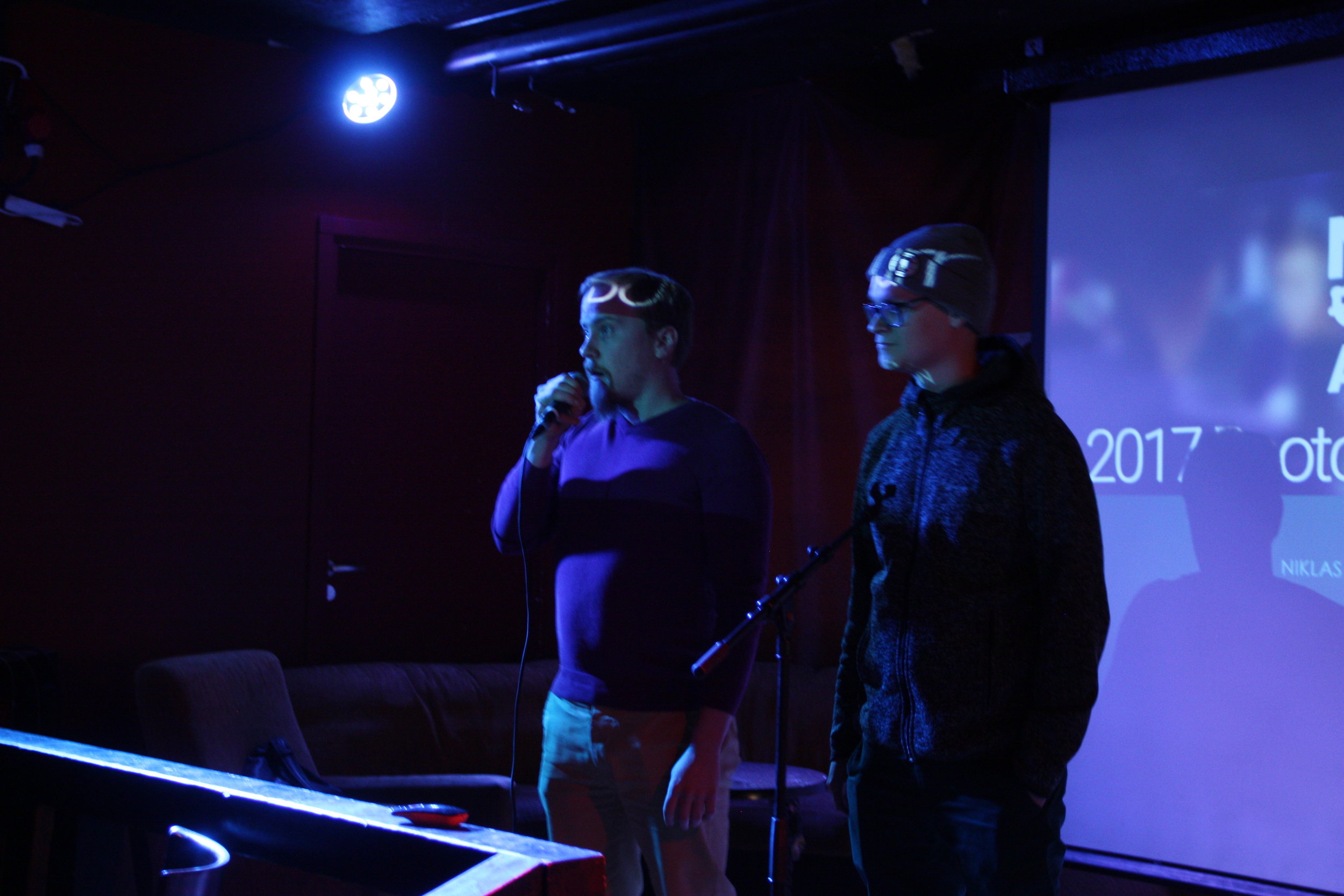
We had a pleasure to have Touko Möttönen, former Kajaani University student and
Niklas Pehkonen to tell us more of this magnificent opportunity in our IGDA March
Gathering. Unfortunately our supposed guest Noel McAvennie couldn’t make it to the
event, but we took care of extra drinks for him.

Touko enlightened us about upcoming bootcamp.

Touko enlightened us about upcoming bootcamp.

The Nordic eSports Academy is a new Finnish summer school and tournament,
which takes place in Kajaani from 12.6 to 6.7 and culminates in 3-day CS GO
tournament in Vuokatti at the end (7.7 – 9.7). The bootcamp includes a series of
lectures, workshops and coaching sessions on a full time basis at KAMK for 80 to
100 students. The total prize pool for the tournament is 10,000€ and we’ll be bringing
approximately 10 to 12 of the best of the bootcamp teams together with a selected 8
to 10 guest teams. We’re hoping to bring some international teams as well as some
top Finnish teams to create something special. The camp is targeted especially for
amateur players, who aim to become professionals.

The bootcamp will be broken down into 5 modules: Business coaching, Physical
coaching, Mental coaching, Gameplay coaching and Testing. The Testing feature is
a new system developed by KAMK that measures a range of performance indicators
for each gamer while playing in a team. The end result will be a radar chart, much
the same as other athletes in traditional sports have to monitor ongoing performance
changes. This Testing system will be developed and exported with the idea that it will
become an industry standard so this is an opportunity for bootcamp teams to be
involved right at the start.

The various lectures, workshops and hands-on coaching classes will be undertaken
by a mix of local experts and international “gurus”. Ville “CISU” LeppĂ€lĂ€, the former
Counter Strike player will do the coaching, while Mia Stellberg, a psychologist of
CS:GO team Astralis will handle the opening week lectures.

This is only the beginning of a new surge in local support for eSports, with major
plans afoot to develop eSports as an official sporting discipline that will be coached
at the Vuokatti Ruka Sports Academy, so we expect to see significant national
interest in what we’re doing as we launch the first bootcamp and tournament this
summer.

Samuli and Pauliina, after a hard evening of an IGDA Gathering

Samuli and Pauliina, after a hard evening of an IGDA Gathering

Written by:
Pauliina Lammi
IGDA Finland Kajaani Hub volunteer
 

April 11th IGDA Helsinki Hub gathering canceled, new gathering date April 18th

IMPORTANT NOTICE: Despite our best efforts we have not been able to secure a sponsor for the Helsinki Hub gathering tonight. We are working on a event for a later date this month, which we will inform more about as soon as we get the details figured out.

Our sincere apologies for the late notice, we were literally working to the last minute trying to make tonight happen!

UPDATE: The gathering has been moved forward by one week to Tuesday April 18th!

Women in Games - Summary!

WOMEN IN GAMES

IGDA Finland Turku Hub February Gathering - event summary!


The February gathering in Saaristobaari was record breaking! Turku got visitors from Helsinki, Tampere and JyvĂ€skylĂ€ – in fact busloads of game developers. There was obviously something magnetic with this month’s theme: Women in Games. We had a stellar panel consisting of Eevi Korhonen from Remedy, Sonja ÄngeslevĂ€ from Unity (and a spider in the web of the Finnish game industry), Karoliina Korppoo from Colossal Order and Agnieszka Besz from Redlynx.


What is it like for a woman to work in a male dominated industry?

KK: Korppoo has been dealing a lot with media. It is interesting that gender is something that media always brings up in their questions. In Colossal Order there are 50/50 males and females, and it became like this naturally, without effort. In the history of game development there has always been women, it is not as uncommon as many think.

SÄ: ÄngeslevĂ€ hates the question. But there are still problems, in big conferences there needs to be more women in panels for example (even though we have an “all female panel” this time). How can we get more women to apply for jobs in the game industry? Women need to be more pushy to get a foot in.

EK: Korhonen says she never had any problems. She works in Remedy, a company with its roots in the demo scene, which meant that the company used to consist of “40 dudes”. But now they are 140, and about 10 % are women. EK thinks this is a matter of company age and what kind of games the company makes. Often we tend to hire people that look like ourselves. But there are a lot of talented women out there.

AB: Besz says there are clearly more male programmers. On the mobile side women are about 23 % and over all the percentage of women is 33 %.


DSCF9029.JPG

Audience question: How has the demo scene demographics affected the situation?

EK: Has not been a part of it.

SÄ: The demo scene is not what it used to be. Now there are game jams, and there are a lot of women there. Jams are a possible way into the industry. Assembly and making demos are no longer the only way to get in.

KK: Women play different games. Based on the player base there should be a lot of women coming into the industry. Colossal Ordes doesn’t have statistics on the gender of the players, but there are no job applications from female modders.


Do women work with different types of games? Are women mostly doing art?

SÄ: A hard question. In Finland most studios are tiny, and especially ones founded by women.

EK: Korhonen used to work for Wooga, and they had more women. The internal culture was welcoming, inclusive, which is attractive for women.

AB: In the console area the majority are men, in mobile there are much more women.


Audience question: How do we find the best talent? How do we attract the best female students? How do we get them to show more courage?

KK: Colossal Order wants the best people. We hire students too, but we are mostly concentrated on filling senior positions. Something has happened in the game industry, it is no more mostly young males. They are turning 30, getting kids, and then they quit the industry. In CO the rules are that we do no overtime, 7,5 hours a day. We very rarely need to break that rule. We just do what we promise on time. By allowing people to have a life outside of the job, we get more experienced people. Proper rest also makes us more creative. Working in CO is a job, but we also love it.

SÄ: You can bring in young trainees. Talk with teachers, to also encourage girls to come. Internships to get to know the industry. Parties for networking. In Unity we have recruitment parties, without any obligation to apply.

EK: Impostor syndrome is probably very common: do I actually have skills? It holds back young people, students. You don’t even try. Find people in the industry and talk about it. Have someone validate you. Find a mentor. Everyone feels the same.

AB: Be confident and just try. There are graduate programs, for example in Redlynx, these are opportunities to learn. We are all normal people who work in the game industry.


Audience question: Is it a recipe for destruction to aim for equality, rather than just letting it happen by itself? Can’t we just aim at being good?

KK: We did that, and got 50/50. But it is important to think of the ideas you have about people, they can affect you when you hire. Preconceived ideas might affect your decision.

SÄ: I was turned down by a company because I was the first woman applying, “You might not like it here”, they said. We need to push and we need networking.

EK: You easily hire people who look like you. Diversity also means we can make games for more people, which means more money. There was an example of a game that was accidentally racist (game mechanics based on skin colour), and it took someone with a darker skin tone to test the game until they noticed the mistake


AB: I’m against forcing, skills are important, but diversity is also important.


Is gaming ruining your (family) life, or is life ruining your game career?

AB: I also do it for myself in my “free time”, it is a passion that affects my whole life.

KK: I haven’t had time to play at home, because of work.

SÄ: Work and life are not separate things. I do a lot of different things, both for my life and for my work.

EK: Gaming ruined my posture.


Audience question: Is not being a woman in the game industry also leverage? Is it really a problem to enter the industry? In the mobile side more women play, and a good CEO would hire more women.

EK: I never felt it, I often felt boxed in. In Wooga there was one instance where I was not a fit for the team.

SÄ: Experience is what matters.

KK: When doing interviews in the US, I had a guy with me, and all the media people talked to the man. In Finland I can sometimes be seen as just a companion to someone, that I’m not someone who “works here”. When it comes to mobile games, the diversity still needs to be there. What is a benefit to me is that people remember me, because I look different. But sometimes I need to explain that I’m not “a lady who only plays causal games” (although I like them too). I often need to explain my game preferences.

EK: All people get boxed in, for example there are dress codes: T-shirt and hoodie. If you put on something “girly” it stands out in a NOT positive way. You have a feeling you should not draw attention to yourself.


Audience question: Will women steal our jobs? Is there such a fear? In some industries there is much resistance to let women in (tech, sports etc). What annoys you the most about this? How could men help?

EK: Just treat us like professionals. I’m just a human.

KK: We’re all human. Ask questions, get to know us. We all have prejudices, then we get past them.

AB: We are not that scary.

EK: And don’t get drunk and tell us we are cute!


Audience question: I work in the car industry, which is also very male dominated. You know the idea of ladies posing next to cars, have you encountered uncomfortable sexualized stuff in games?

KK:  In games conferences there have been incidents with ladies in bikinis. In some countries this is more common, but in for example Sweden they are much more sensitive, never anything offensive.

SÄ: 15 years ago it was much worse. Boobs. Now not so much. The world is changing. There are many genres now, and also “boob games” for those who want that.

EK: All of the Internet
 The most annoying thing is that the sexualized stuff excludes people who don’t enjoy that.

AB: A beautiful picture sells better, gender is not always the thing.


Audience question: People are often surprised at female members in E-sports teams. How will women be part of the game industry in the future?

EK: It is unstoppable progress. One day women, and all sexes, will be a normal thing in the industry. It is only a matter of time, but it is good that there are people who criticize the situation now. This normalizes the idea of women in the game industry.

KK: It is a matter of the amount of players growing. The industry needs to make more diverse games, for different players. In 10-20 years the problem will be over. There will be more people with skills that can enter the E-sport scene, they will have more training. There’s a lot of stuff around games, streaming and so on.

EK: This notion of the “gamer”, there is no such stereotype anymore. In the future games are no longer some precious guarded playhouses.


Audience question: A producer asks: do you always have to be either an artist or a programmer? What other jobs are there?

SÄ: There are many more roles now: monetization, analytical skills, producers don’t need to know programming. You don’t even need a certain kind of background, I know one designer who used to be a librarian. Get experience in order to grow into the role you wish to land.

EK: Data is huge. Communication – engaging the community, being a buffer between audience and developers. Producing videos


AB: Games have become bigger and more interdisciplinary. Only a programmer cannot make games for a bigger audience. There is also a need for team managers, because teams are bigger.


Audience question: About genres, there are untouched markets in PC. A lot of the games are still marketed for a certain kind of male. So many genres are not explored at all! What genres could be more explored, are there some that are more easily targeted to women?

SÄ: As an investor, and knowing investors: they invest in less risky genres. It is hard to get funding for new stuff. New genres need entrepreneurs pushing new ideas. It takes a lot of time.

KK: Yes, it is difficult to get investments for totally new ideas. Some genres are insanely expensive. With a shoe string budget you make something small, and see if it sells. Simulations you can make with a small team, but they appeal to a wide audience. What do the players actually want? Money and hours go into investigating what appears to be “untapped areas”. Cities: Skylines filled such a segment.

AB: You need money to support the team, and you need to compromise – make small changes to existing genres. New genres are too risky.

EK: indies and hobbyists can push the envelope. There are new areas to explore in art installations using game mechanics for example. New tech, VR, big IP’s like Pokemon GO can bring in new things.


Audience question: about stories, and the clichĂ© “the scruffy white guy”. Are you accused of pandering when you don’t use that clichĂ©?

EK: Well, look at the Remedy office and the huge posters
 We have had a discussion in the company, that maybe we are finished with telling the story of the “anguished white man”. I’d love to do something different


KK: In teaching, when students use this cliché, I ask: is this the most interesting character? Would you get new players with another kind of character? Would something else be valuable? You get a tiny extra bit of attention with other characters


Walid O. El Cheikh from Aalto University presenting Game Executive Program.


Sleepy Sentry showing their game at demo-corner.